
*Repost from a previous blog to this current one*
American Renaissance 1876 to 1917
As necessary as a body is to a soul, the philosophical movement, known as Transcendentalism, embodied some of the strongest souls as its members. Along with Ralph Waldo Emerson, Nathaniel Hawthorne, Margaret Fuller, and Henry David Thoreau, Louisa May Alcott wrote about her life and philosophies that supported the ideology behind Transcendentalism. A strong, independent woman, Alcott became synonymous with the early American Renaissance Movement. America has a long history of assuming women as second-class citizens, but women like Alcott stood out from the crowd. Long admired for her writings about her sisters, the author of the children’s book Little Women, Little Men, and Hospital Sketches, Alcott began her literary passions in the typically male dominated arena of noir stories. Forced to assume a seemingly male pseudonym, Alcott was initially published under the name “A.M. Barnard.” (Stern, 1995) Viewed as scandalous, by even todays standards, Alcott’s short stories took on subjects such as human sexuality, drug use, politics, and revenge. Having only been born outside Philadelphia, Pennsylvania and then raised in Concord, Massachusetts, Alcott wrote about worldly topics, for what seemed to be a small piece of America that had only begun to travel around. Alcott’s inevitable success with Little Women, under her own name earned her a spot at in the literary canon of voices to be heard and recognized form the Transcendental movement and the age of American Renaissance.
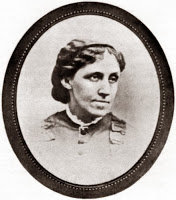
Initially writing under the pen name A.M. Barnard, Alcott received very little money from the publications of her short stories. Since Alcott wanted to live her life as a writer, she knew she had to work on her craft and hone her skills. With her tight circle of other like minded individuals surrounding her, Alcott was influenced to write what she knew and born was Little Women. A story woven around her life growing up in Concord, Massachusetts, Alcott wrote about her and her sisters. This novel elevated Alcott from the pen named, short story writer she was to the author we know her to be today. She gained independence financially with this novel and was able to further her literary career and her life as she chose. Taking from one of the key tenants of the transcendental philosophy that she followed and was raised with, Alcott had achieved independence and self reliance. This was uncommon for women during her lifetime, but not only did this keep Alcott from pursuing her dream, but it seemed to kindle the fires that kept that passion going.
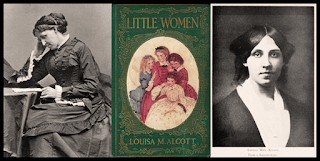
Many voices were part of a collective movement called Transcendentalism. A philosophy that believes “men and women equally, have knowledge about themselves and the world around them that “transcends” or goes beyond what they can see, hear, taste, touch or feel.” (U.S. History, 2014) Between the years of 1836 through 1860, a group of likeminded individuals ascribed to this philosophy, whether coming to it as a life choice or essentially born into it, like Alcott, this philosophy centered around transcendence. Alcott was raised by parents who saw beyond societies limitations and taught their daughter to be who she wanted to be, not who society told her to be. Alcott never married, a choice made to live her life on her own terms, while pursing her literary passions that transcended societal norms. Transcendentalism philosophy that believed “men and women equally, have knowledge about themselves and the world around them that “transcends” or goes beyond what they can see, hear, taste, touch or feel.” (U.S. History, 2014) Between the years of 1836 through 1860, a group of likeminded individuals ascribed to this philosophy, whether coming to it as a life choice or essentially born into it, like Alcott, this philosophy centered on transcendence. Alcott was raised by parents who saw beyond societies limitations and taught their daughter to be who she wanted to be, not who society told her to be. Alcott never married, a choice made to live her life on her own terms, while pursing her literary passions that transcended societal norms.


This five story collection was not put together until 1995, but it includes the original stories, as written by Alcott, under her pen name A.M. Barnard. These fives stories are key to understanding the whole of who Louisa May Alcott was. Determined to be a voice admired and remembered for what she wrote, Alcott never once hesitated to speak her mind or tread in literary waters that weren’t welcoming. Despite having been born a woman, her parents did not impose social code upon her and Alcott took this very seriously. Her life was hers to do as she wished. Writing about taboo subjects was where Alcott gave it her all and bled for the reader to see just what was going on in one of the greatest minds of the Transcendental Movement and the American Renaissance.


Transcending the traditions of any era, those that chose to take a stand and speak for individuality and self-reliance are the voices we remember throughout history. Louisa May Alcott is one of those voices. Reinforcing her natural talent to weave story together about her and her three sisters that awakens the inner child in anyone who reads it, Alcott needed only to be recognized for that talent. The American Renaissance movement awakened the romantic side of literature and like any good love song, great lyrics are written and crooners everywhere sing their siren song. Alcott was such a siren that without her contributions to literature women today might not have known that women of the late and early centuries were struggling with the same desires and passions to be heard and seen. At the end of the day, we are all connected, but also individuals just waiting to shine and Alcott showcased how we can accomplish both simultaneously without compromising yourself and your art.


References
- Baym, N., & Levine, R. S. (2012). The Norton Anthology of American Literature Volume A & B (8th ed.). New York, New York: W.W. Norton and Company.
 Section 8 Agency
Leave a comment