
*Repost from an old blog-moved to this current blog*
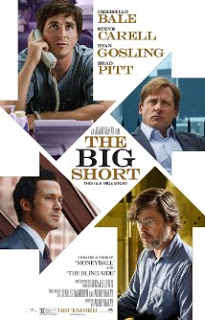
The Big Short (2015)
This film brought the behind the scenes orchestrators of the early 2000’s housing bubble to the forefront. Director Adam McKay, also known for Anchorman, Step Brothers, and The Other Guys, has taken his skill for directing an ensemble cast, pivoting great dialogue and action off each other, into this. This film tells the true-life story of the banking crisis that brought America to its knees, by humanizing the characters that played a major role in this historical event. Everyone in America can tell you how the housing crisis affected their lives or the lives of someone they know, but not many can tell you who were the key players and what exactly did they do to cause it. This film does a great job filling in all those blanks while making viewers laugh, cry, fill up with anxiety, and drain them to exhaustion.
Tired of the monster that is Wall Street, character Ben Rickert, played by Brad Pitt is the off-grid genius that helps two low level wanna be’s, played by John Magaro, playing Charlie Geller, and Finn Wittrock, playing Jamie Shipley. The three-circle each other in the way a triangle clips over, often needing a push, leaving one at the top and the two following along. This triangle of actions leads to an incredible amount of money made profiting off of the bet that the housing market would collapse. This bet is what drives the movie, demonstrating the many angles in which it was a tackle, but doing so while teaching viewers exactly how the whole crisis took place and made off with everyday folks money.
One of the larger storylines that threads throughout the film, bringing viewers on a fantastic journey, is told through Mark Baum’s story, as played by Steve Carell. Baum is approached by Jared Vennett, played by Ryan Gosling about this bet for the collapse and as he researches whether Vennett is scamming him and his team or if he one lucky bastard that just stumbled upon the richest bet ever, he shows viewers how far-reaching the crisis was. Everything from the innocent players who were being used, but playing along because they weren’t smart enough to know better, all the way up to the orchestrators of the math behind the bubble, Baum teaches viewers just what a big short is and why everyone needs to know about it. Inserting a little humor while doing so makes all of the lessons palatable by viewers, including a half-naked Margot Robbie explaining bonds, bubbles, stocks, and taxes.
Mckay has a knack for directing and writing male-driven ensemble casts in a way that keeps viewers hooked from the very moment it starts all the way till its conclusion, without feeling like its just a sausage fest. The Big Short includes great actors like Marisa Tomei, who plays Baum’s wife. Tapping into the current trend for a ginger for every season, Karen Gillian, plays Evie, a friend who makes just enough of an impression and does so while adding to the storyline. McKay gave viewers a film that steps beyond his usual comfort zone of laughs for the sake of laughs and gives viewers a history lesson, but without the snooze fest fact that often accompanies a film trying to give a healthy dose of true events. I have decided that this film is an American Cinema canon film that should be passed out to every baby born and immigrant coming to our borders. As the saying goes, The More You Know.
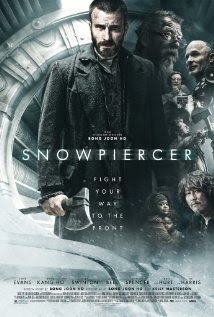
Snowpiercer (2013)
Joon Ho Bong writes and directs this socially and politically aware film that takes the main character Curtis, played by Chris Evans on a futuristic journey that could happy if global warming and corporations broke Earth. With an almost Hunger Games feel the film, entering into the world of life on an ever-moving train filled with last of the human race, the rich are given privileges and access that the poor and desolate are not. Keeping the poor in line, Tilda Swinton, plays Mason the face of the rich, but with more to her character than initially let on, Ho Bong directs Swinton in a way that elevates her character off of the screen. She not only stands out but demonstrates the many layers to Swinton’s capabilities as an actress.
Curtis has many allies on the train, that he joined at the age of nineteen. Now a man capable of warlike tactics and planning in the apocalyptic world, he is joined by John Hurt who plays Gilliam, the man that has many secrets and love for Curtis. Coupled with Tanya, played by Octavia Spencer and Edgar, played by Jamie Bell, Curtis makes his plans and executes them bringing viewers on an often blood pressure raising journey through the tube of the train looking for control and freedom. Unsure of whether the film was going to deliver or not, I enjoyed watching the film due to the quality of acting and several key scenes that can only be attributed to a great screenwriter. By the time the film comes to a close, the pay off was coming, but with an added bonus of the potential for it to continue. This film not only has the capability of going into a follow-up part two but potentially even a series. The characters are great, the story is interesting, and the acting is remarkable. Futuristic worlds can sometimes come across as played out storylines, but Snowpiercer shows that really all that’s lacking is a great imagination to make a great one.
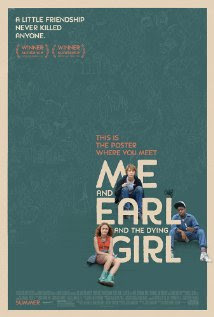
Me and Earl and The Dying Girl (2015)
This quirky little comedy, based upon a novel of the same name, was written by the author of the book, Jesse Andrews and directed by fairly new Director Alfonso Gomez-Rejon. The story’s main character Greg, played by Thomas Mann begins the film with a great hook, a boy at his computer trying to type up his story, but clearly demonstrating his insecurities at the same time. Andrews wrote a relatable character in an uncommon circumstance. Small town America characters Greg and his “business partner” albeit best friend Earl makes small films that are puns of actual films due to the influence of his sociology professor’s father’s influence and love for international cinema. This film pulls viewers in and keeps them for the love of the characters as well as the love of their journey.
Right off the bat, Greg is resistant to even involving himself in the life of the dying girl and furthermore has even less interest in growing up and conducting himself outside of the imaginary world he and his friend have created for themselves. It isn’t until his friendship blossoms with the dying girl Rachel, played by Olivia Cooke, that Greg learns that his films won’t evolve and become beautiful works of art until he puts himself out there and makes a real human connection, but often that means doing it knowing heartbreak are inevitable. Greg’s journey is a journey all of us have gone on. You don’t have to be a teenage boy to relate to Greg and his journey, but you do have to see beyond his dad’s regionally diverse foodie habits and the often long conversations about throw pillows. In the world of a teenager, it is all relevant. I would see this film as a coming of age film that even big-city teenagers can relate to, adults who are far removed from their teens but remember that feeling of insecurity in a room full of people, and any person looking for humanity in youth. This film isn’t showcasing the exception to the rule but instead exemplifies it for all of us watch and see, because film at its best is voyeuristic.
 Section 8 Agency
Leave a comment