
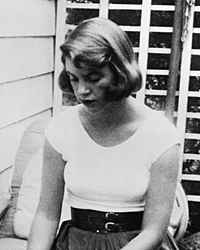
Sylvia Plath’s poem “Daddy” reads like a personal journal entry. The narrator is speaking to the subject, yet it divulges personal, private feelings the narrator feels about the man she calls “Daddy.” Bearings her heart, the strong feelings she has, the narrator states, “Daddy, I have had to kill you – you died before I had time” (Plath, 2005, p. 1145). The expression of homicidal thoughts about this man is a subject that is uncommon is poetry written in previous centuries. Plath’s remarkable writing style was what made her a literary icon, but her soul bearing journal poetry is indicative of the twentieth century poetry that set itself apart from the previous decades.
In the 16th century, poetry discussed topics of sadness, but with a lighthearted subject matter, such as in the anonymous Elizabethan and Jacobean Poem “Weep You No More, Sad Fountains” (Ferguson, 2005, p. 98). Typically heavy in religious subject matter and whimsical fanfare, 16th century poetry can sometimes discuss sadness as if it were no different than “a rest that peace begets,” (Ferguson, 2005, p. 98).

In the 17th century Ben Jonson wrote two poems about the death of his first children, expressing such deep sadness and depression about their passing. Yet these two poem’s “On My First Son” and “On My First Daughter” were kept to an obituary type of expression of his sadness. Keeping with religious preoccupation, but incorporating the reality of death and its finality, Jonson said goodbye to his children in these two poems.
The 18th century began to turn the tide for how sadness was treated in poetry. Emily Dickinson wrote about death as if it were a friend that she accepted as a friend, lashed out at and expected in her daily life. Her most famous “Because I Could Not Stop for Death,” poem put her name at the top of the list of important poets of the 18th century, more importantly, on the subject of death and sadness. Emily Dickinson paved the way for poets in the 19th and 20th centuries who lived a life of sadness and depression, then wrote about it. Dickinson made it socially okay to be depressed.

When the 20th century rolled around, poets like Sylvia Plath could openly and without social judgment write poetry that was intimate and beyond the realm of treating death and sadness as something that just happened. Instead Plath took death and sadness and put it in its place. Battling depression herself, Plath gave sadness and death the role it represented in the 20th century, the thief that came in the night and took people from the lives of those who wish they had gotten there first. Like all poets, sadness is expressed in each word, its placement, its connection to the whole piece. Poetry is the place where poets unburden themselves and expect the poem to hold all of its trauma history. Poetry as an outlet is much more than just a place to get some things off of ones chest, but a place to package away feelings without losing sight of its weight on each poets soul.
 Section 8 Agency
Leave a comment