
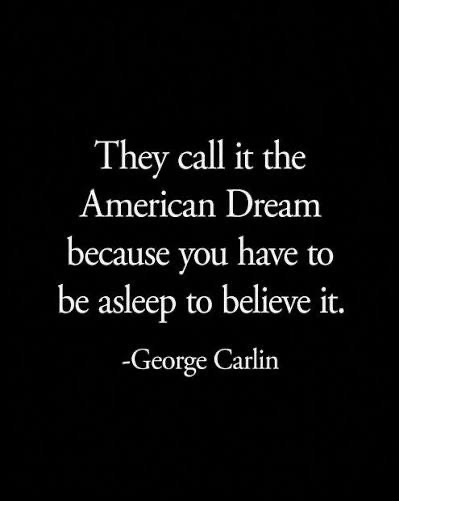
There was a time when the American Dream was presented as a simple equation. Work hard, pursue an education, build your skills, and treat people with integrity, and opportunity would eventually find you. Success was never guaranteed, but people believed effort mattered. Parents taught this lesson to their children, teachers reinforced it in classrooms, and employers repeated it in recruitment campaigns. The idea that merit would ultimately overcome circumstance became one of the defining beliefs of American identity.
Today, that belief is becoming much harder to defend.
Talk to anyone who has spent months searching for work, whether they are an experienced professional, a recent graduate carrying student debt, or someone trying to change careers, and a different story emerges. It is a story of hundreds of applications disappearing into online portals, carefully written cover letters that receive no response, automated rejection emails arriving within minutes, and interviews that simply vanish without explanation. Many applicants are left wondering whether another person ever saw their résumé.
Technology promised to make hiring faster and fairer. Artificial intelligence, applicant tracking systems, and automated screening tools were introduced to reduce bias and help employers identify the strongest candidates. In theory, these systems would focus on skills instead of subjective opinions. In reality, many job seekers see them as invisible gatekeepers operating under rules no one fully understands.
Applicants now spend almost as much time learning how to satisfy software as they do developing professional expertise. Entire industries have appeared to teach people how to optimize résumés with keywords, avoid formatting mistakes, and rewrite applications so they mirror job descriptions. Being qualified is no longer enough. Candidates must also understand how software evaluates their qualifications before a hiring manager ever has the chance to review them.
For professionals with decades of experience or careers that span multiple disciplines, this process can feel deeply dehumanizing. Years spent leading organizations, managing budgets, teaching students, conducting research, or serving communities can be reduced to nothing if a résumé does not contain the right terminology. Hiring starts to feel less like evaluating capability and more like solving a vocabulary puzzle.
Artificial intelligence, however, is only part of the problem.
Another growing frustration is the rise of “ghost jobs.” Investigations and employer surveys have shown that some companies keep positions posted during hiring freezes, advertise openings to build future talent pools, or leave listings active after an internal candidate has already been selected. There are legitimate reasons this happens, and not every posting reflects bad intentions. Still, the result for applicants is the same. They spend hours researching companies, tailoring applications, and imagining careers built around opportunities that may never have been real.
The emotional cost of this process is rarely acknowledged because it is difficult to measure. Every application requires time that could have been spent with family, continuing an education, or simply recovering from another disappointing day. Every interview requires emotional investment. Every rejection chips away at confidence. After hundreds of applications over many months, disappointment often becomes something much deeper. It becomes self-doubt.
At the same time, unsuccessful applicants are almost always given the same advice. Network more. Build your personal brand. Become more active on LinkedIn. Attend conferences. Publish articles. Connect with influential people. None of these suggestions are inherently wrong. Professional relationships have always mattered, and networking can create valuable opportunities. The problem arises when networking becomes more important than qualifications themselves.
Many applicants now believe that access to desirable careers depends less on demonstrated ability than on proximity to existing networks. Internal referrals receive preference. Alumni networks create informal pipelines. Hiring managers naturally trust recommendations from colleagues. Friends hire friends, and former coworkers recruit one another. These practices make sense from an organizational standpoint, but they also create professional circles that can be difficult for outsiders to enter regardless of how qualified they may be.
This creates an uncomfortable contradiction. Organizations publicly promote diversity, merit, and equal opportunity while continuing to rely heavily on informal relationship networks that many applicants simply do not have. Most hiring managers are not acting unfairly or maliciously. They are responding to limited time, institutional pressures, and the desire to reduce hiring risk. Even so, thousands of reasonable decisions can collectively create a labor market that feels inaccessible to people without established connections.
Personal branding has only added another layer to the problem. Today’s professionals are expected to do far more than submit a résumé. Employers often review LinkedIn activity, articles, conference presentations, podcasts, social media accounts, and evidence of thought leadership before making hiring decisions. Visibility has become a valuable professional asset.
For some people, especially those whose careers naturally involve public engagement, this expectation fits their interests. For many others, it feels exhausting. Work increasingly extends into personal life as people are encouraged to turn hobbies into brands, everyday experiences into content, and relationships into networking opportunities. The expectation is no longer simply to perform well at work. It is to remain professionally visible all the time.
This reflects a much broader shift in how Americans think about work. Employment now demands emotional labor, digital labor, and reputational labor alongside the responsibilities listed in a job description. Workers are expected to remain engaged, optimistic, visible, and professionally active because disappearing from public view can have economic consequences.
The result is more than fatigue. It creates instability. People with advanced degrees, decades of experience, and long records of public service often begin questioning their own value after months of unanswered applications. Financial insecurity is certainly part of the problem, but the deeper issue is psychological. When institutions repeatedly fail to recognize someone’s contributions, even accomplished professionals begin wondering whether those contributions mattered.
None of this means merit no longer exists or that networking determines every hiring decision. Many organizations continue to recruit thoughtfully, evaluate candidates fairly, and hire the most qualified people. Persistence, talent, and genuine expertise still open doors every day. Pretending otherwise would ignore the complexity of today’s labor market.
At the same time, it is difficult to argue that the playing field remains level or that technology has automatically made hiring fairer. Automated screening, informal hiring networks, personal branding, and increasingly opaque recruitment practices have fundamentally changed how opportunity is distributed. Success often depends as much on navigating these systems as it does on the qualifications those systems are supposed to measure.
Perhaps this is the quiet redefinition of the American Dream. It no longer promises that hard work will create opportunity. Instead, it asks people to continually improve themselves in the hope that opportunity might eventually appear. Earn another credential. Rewrite the résumé again. Attend another networking event. Publish another article. Grow another online audience. Learn another platform. Stay relevant. Stay visible. Stay hopeful.
The dream still exists, but it feels increasingly out of reach.
For many Americans, the greatest challenge is not a lack of ambition or willingness to work. It is navigating institutions that increasingly reward visibility over substance, access over openness, and familiarity over potential. The tragedy is not individual failure. It is the gradual acceptance of a system that requires people to constantly prove their worth while providing fewer genuine opportunities to demonstrate it.
If the American Dream once meant that talent, effort, and perseverance could build a better future, perhaps the defining question of this generation is no longer whether people are working hard enough. Instead, we should ask whether the systems responsible for creating opportunity still recognize human potential or whether efficiency, automation, and institutional convenience have become more important than connecting capable people with meaningful work.
Until we are willing to confront that question honestly, we will continue encouraging millions of Americans to keep believing while quietly preparing them for disappointment. The dream is still alive, but for far too many workers it has become less a destination and more an obligation, one that demands constant sacrifice while offering increasingly uncertain rewards.

